
Marine Ecology
Marine Ecology
Understanding the Marine Environment
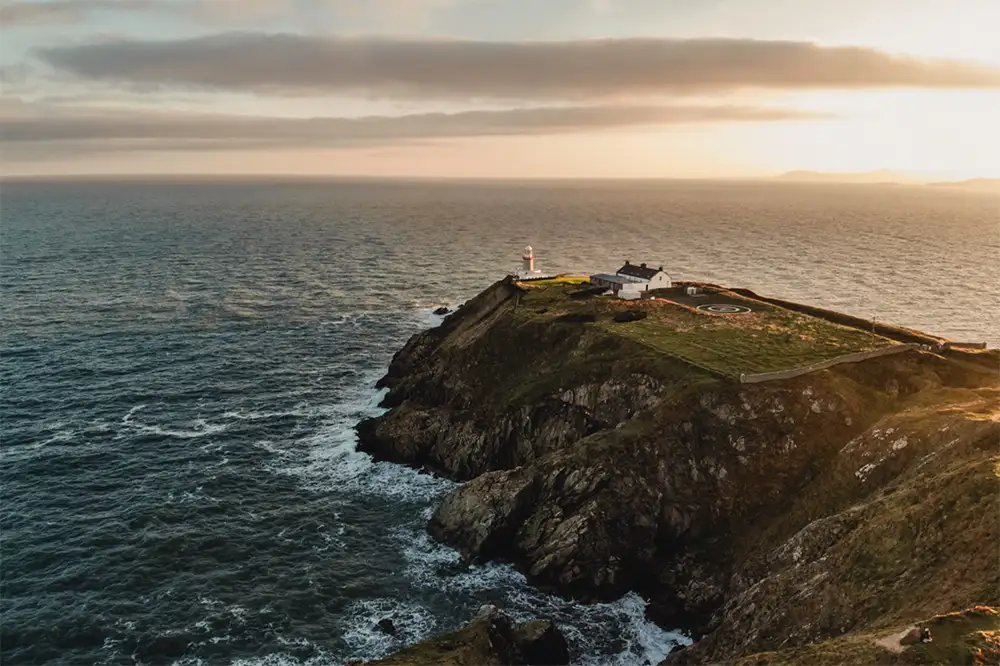
View of Dublin Bay from Howth Head
Understanding this environment has been a fundamental part of developing Dublin Array. Every offshore wind project is different and must be designed with its specific receiving environment in mind. That is why Dublin Array has undertaken extensive onshore and offshore environmental surveys over many years to build a detailed understanding of the marine environment, the species present and how they use the area.
The information gathered through these surveys has informed project design, environmental assessments and the environmental protection measures included within Dublin Array’s planning application.
To learn more about some of the extensive environmental surveys undertaken for Dublin Array, click here.
A Diverse Marine Ecosystem
The project location supports a wide range of habitats and species, from the seabed to the sea surface and the skies above.
- On and Beneath the Seabed
The seabed within the wider project area contains both sandbank and sediment habitats that support diverse communities of marine plants and animals. These habitats provide important feeding and nursery grounds for many species and form the foundation of the marine food web.
A variety of benthic species, including shellfish, crustaceans, worms and other invertebrates, live on and within the seabed. Understanding these habitats has been an important part of Dublin Array’s environmental assessment and project design process.
- Within the Water Column
The waters above the seabed support a range of fish and shellfish species, alongside marine mammals that regularly use the Irish Sea.
Species such as harbour porpoise, dolphins and seals are known to occur within the wider area. Extensive marine mammal and fish surveys have helped build an understanding of how these species use the project area and have informed both assessment and mitigation measures.
- Above the Water
The Irish Sea is an important area for a variety of seabirds and migratory birds. Different species use the area for feeding, resting, commuting and seasonal migration throughout the year.
Dedicated bird surveys have been undertaken over multiple years to understand bird activity within and around the project area and to help inform project design and environmental assessment.
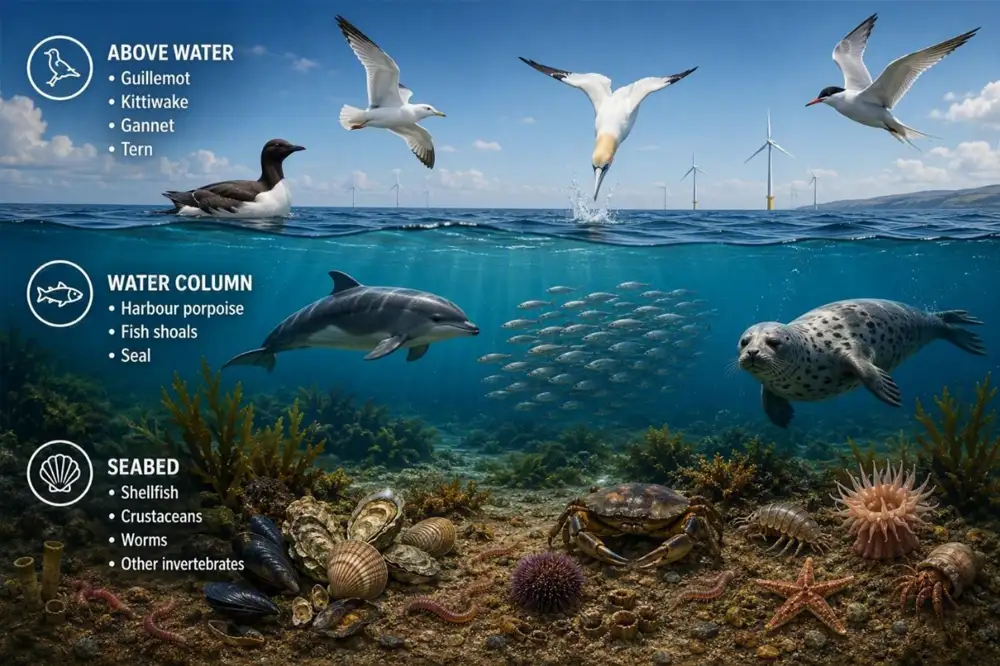
Overview of Dublin Bay’s Marine Ecology
Designing for the Environment
Protecting the marine environment begins long before construction starts.
The extensive environmental surveys undertaken for Dublin Array have helped inform project design decisions from the earliest stages of development. Understanding the characteristics and sensitivities of the marine environment allows environmental considerations to be integrated into decision-making throughout the project lifecycle.
Environmental information has informed aspects of the project including turbine layout, cable routing, construction methodologies and operational planning.
For example, project design has considered a range of environmental and marine users, including seabirds, marine mammals, commercial and recreational marine users, and navigational requirements. Air gap requirements between the sea surface and turbine rotors have been carefully assessed to accommodate marine users while also considering environmental factors.
This evidence-led approach seeks first to avoid potential impacts where possible and then minimise and manage any remaining impacts through design and mitigation measures.
Protecting the Marine Environment During Construction
Protecting marine life and habitats is a key consideration planned to be implemented during the construction phase of Dublin Array.
Environmental assessments undertaken as part of the planning application have identified a range of measures designed to avoid, minimise and mitigate potential impacts on marine mammals, fish, birds, seabed habitats and water quality.
Protecting Marine Mammals
Dublin Array has developed a dedicated Marine Megafauna Mitigation Plan which sets out measures that may be implemented during offshore construction activities, depending on the final construction methods used and the requirements of the relevant consenting authorities.
Examples of mitigation measures include:
- The use of trained Marine Mammal Observers.
- Pre-construction monitoring and surveys.
- Passive Acoustic Monitoring systems where appropriate.
- Establishment of mitigation zones around activities.
- Controlled “soft-start” or “ramp-up” procedures that allow animals time to move away from an area before full construction activity begins.
- The use of Noise Abatement Systems (NAS) to reduce underwater noise associated with certain offshore construction activities e.g bubble curtains.
- Activity-specific mitigation measures developed in consultation with relevant statutory authorities and environmental regulators.
Together, these measures are designed to help reduce potential disturbance to marine mammals and support their continued use of the surrounding marine environment.
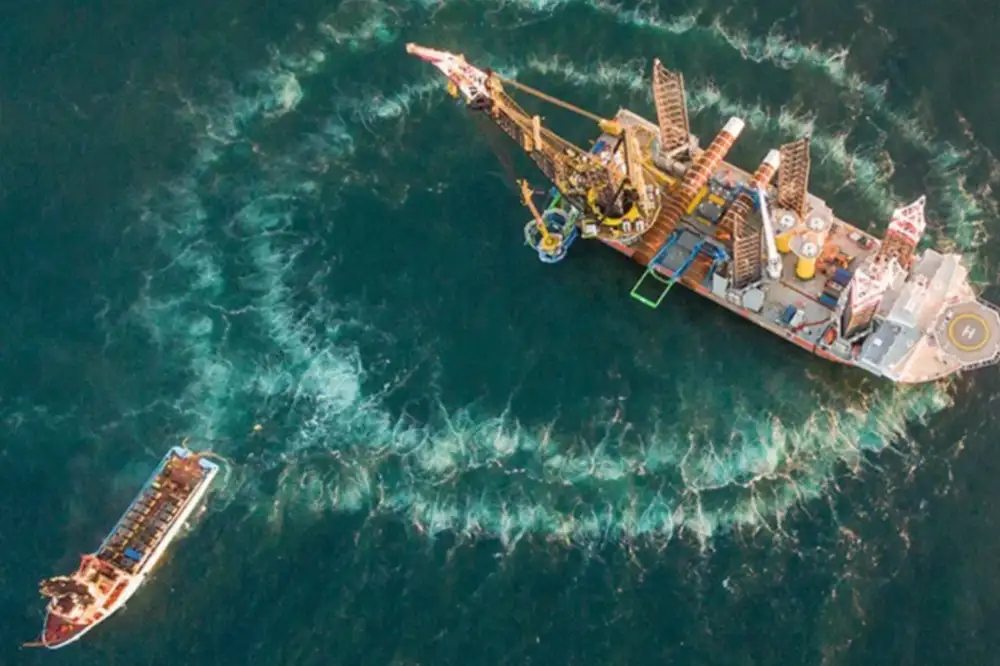
Example NAS called Bubble curtains being used during construction of RWE’s Sofia offshore wind farm
Protecting Seabed Habitats and Water Quality
- Careful cable route selection and infrastructure design.
- Pollution prevention and environmental management procedures.
- Controls on vessel activities.
- Construction management practices designed to minimise disturbance to sensitive habitats where possible.
- Ongoing environmental oversight throughout construction activities.
Monitoring Throughout the Project Lifecycle
Environmental stewardship does not end once construction is complete.
Monitoring programmes form an important part of Dublin Array’s environmental management approach and help assess the effectiveness of mitigation measures throughout the life of the project.
Depending on regulatory requirements and project activities, monitoring may include marine mammals, birds, fish, seabed habitats and water quality. The information gathered helps improve understanding of environmental interactions and supports ongoing environmental management.
Dublin Array will also continue to engage with regulators, statutory bodies, scientific experts and stakeholders to ensure environmental protection remains a central part of project delivery throughout construction, operation and eventual decommissioning.
Climate Action and the Marine Environment
Climate change and biodiversity loss are closely linked environmental challenges.
Rising sea temperatures, changing ocean conditions and increasing storm intensity are placing additional pressure on marine ecosystems around the world. Addressing climate change is therefore an important part of protecting marine environments over the long term.
Offshore wind plays an important role in reducing greenhouse gas emissions by generating renewable electricity without the need for fossil fuels. By supporting Ireland’s transition to cleaner energy sources, offshore wind can help reduce the long-term environmental pressures associated with climate change.
Once operational, Dublin Array has the potential to offset up to 1.4 million tonnes of carbon emissions annually, making a significant contribution to Ireland’s renewable energy and climate objectives.
Looking to the Future
Alongside efforts to avoid, minimise and mitigate environmental impacts, researchers and offshore wind developers across Europe are continuing to explore how offshore wind projects may coexist with and potentially support broader environmental objectives.
A growing body of international research has examined topics such as nature-inclusive design, habitat enhancement and the ecological value that may develop around offshore infrastructure over time.
Studies have shown that turbine foundations and associated scour protection can create reef-like habitats that may be colonised by marine plants and animals, increasing habitat complexity and providing shelter for species such as shellfish, crustaceans and fish.
One example is RWE’s Rampion Offshore Wind Farm off the south coast of England, where specially designed reef cubes have been installed as part of a reef enhancement project to explore opportunities to support marine biodiversity. See below:
While the primary objective of Dublin Array is to understand the marine environment and avoid, minimise and mitigate potential impacts, the project recognises the value of continued research and innovation that may help support wider environmental objectives in the future.
Our Commitment
At Dublin Array, protecting the marine environment and supporting Ireland’s transition to renewable energy are complementary objectives.
As part of RWE, one of the world’s leading offshore wind developers, we are committed to applying scientific evidence, international best practice and lessons learned from offshore wind projects across Europe throughout the development, construction, operation and eventual decommissioning of the project.
Through ongoing environmental monitoring, stakeholder engagement and a commitment to innovation, we will continue to place environmental stewardship at the heart of our approach to the development of Dublin Array.